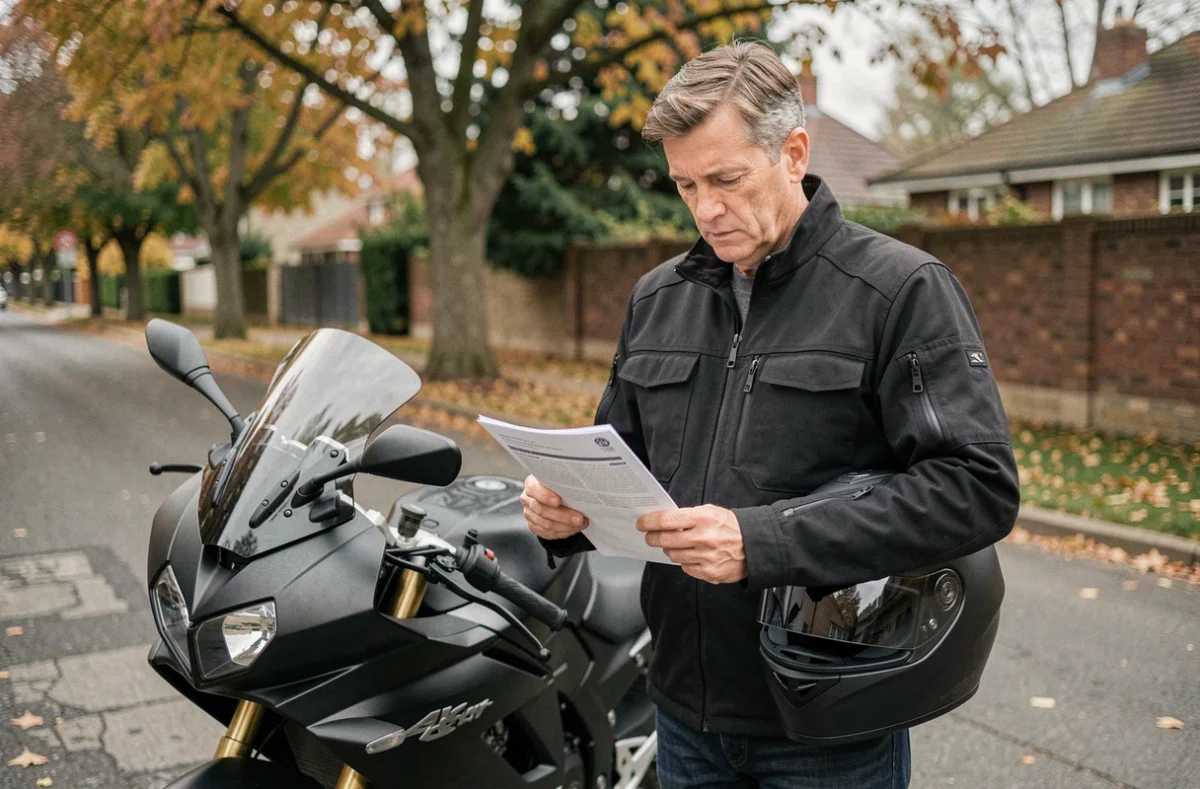
In France, every owner of a motorized two-wheeler must take out at least third-party liability insurance. This mandatory cover pays for damage caused to others, but leaves the rider and their bike unprotected in the event of a fall, theft or breakdown. Choosing the right motorcycle insurance cover means understanding what each policy actually protects—and, above all, what it excludes.
Motorcycle rider personal injury cover: the most costly gap
Third-party liability insurance compensates other people injured in an accident. The rider responsible for the accident is not covered. A solo fall on a bend, braking on gravel, or running off the road with no other party involved: in all these cases, medical expenses, lost income and any resulting disability remain the rider’s responsibility.
Rider personal injury cover fills this gap. It applies regardless of the rider’s degree of fault. Three factors determine how effective it really is.
- The compensation limit, which sets the maximum amount paid for all bodily injuries. A limit that is too low may prove inadequate in the event of a serious disability.
- The disability threshold that triggers cover. Some policies pay nothing below a specified permanent disability rate, excluding injuries that can still have a significant impact on everyday life.
- Specific exclusions, such as riding on a racetrack, not holding a valid licence or failing to wear an approved helmet.
Even a policy described as comprehensive does not automatically cover the rider’s injuries. Checking whether this cover is included—and what it provides—in the policy schedule is one of the best ways to protect yourself. Taking out insurance for a single-vehicle motorcycle accident makes particular sense when you consider how much a fall with no other party involved can cost.
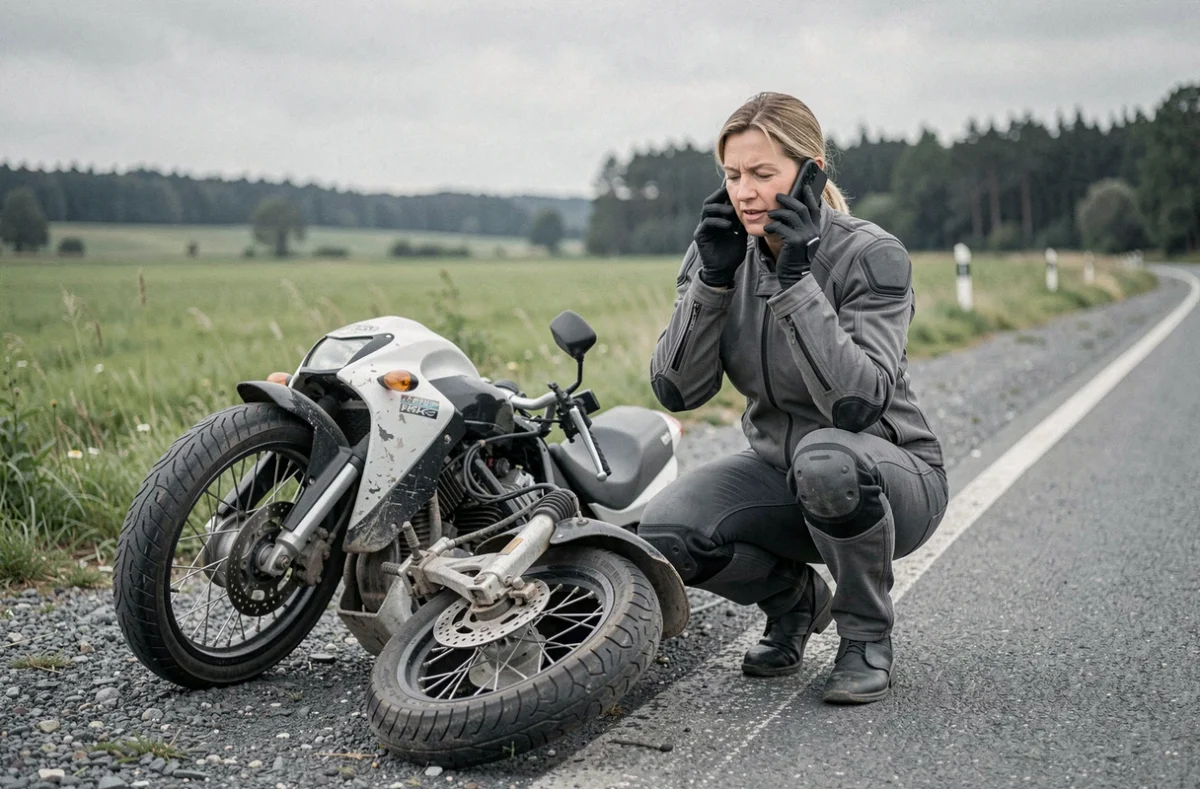
Theft, fire and damage to your bike: tailor your cover to its value
Theft and fire cover is often presented as a single package, but it is worth checking exactly how it works. Compensation is generally based on the motorcycle’s market value at the time of the claim, not its purchase price. For a recent model, the difference may be small. For a motorcycle more than three years old, depreciation can significantly reduce the payout.
Some insurers offer a “new-for-old” option for the first few years. Others apply a fixed annual depreciation rate. Comparing these arrangements before signing can help you avoid unpleasant surprises when making a claim.
Collision damage and all-accident cover
Collision damage cover pays for damage to your motorcycle after a collision with an identified third party. It does not apply if the other party flees the scene or if you fall off on your own. All-accident cover offers broader protection: it covers damage to your bike even when no third party is identified, including running off the road, hitting a stationary object or dropping the bike while stationary.
For a motorcycle that is still valuable enough to repair, all-accident cover offers significantly more protection than collision-only cover. For an older bike with a low residual value, however, the extra premium may outweigh the potential benefit.
Motorcycle breakdown assistance and legal expenses cover: two often-overlooked benefits
Breakdown assistance applies in the event of a breakdown or accident, covering vehicle recovery and sometimes the rider’s return journey. One detail can make all the difference: the minimum distance from home required to activate the cover. Some policies exclude breakdowns that occur within a few dozen kilometres of home, which can be an issue in urban areas.
Riders who regularly travel abroad should check the geographical scope of the assistance cover (Europe, neighbouring countries) and how long accommodation costs are covered.
Legal expenses cover after an accident
Legal expenses cover pays for legal representation and pursuing a claim when a rider disputes an accident report, seeks compensation from a third party or faces a claim against them. It covers the lawyer, expert and legal costs up to the policy limit.
It can be particularly useful when liability for an accident is shared or disputed. Without it, the rider must bear the cost of legal proceedings alone, which can drag on for several months.
Connected devices and items carried: check the grey areas in your policy
An intercom attached to a helmet, a GPS mounted on the handlebars and a smartphone kept in a bag may not all fall into the same category under a motorcycle insurance policy. Limits, excesses and proof requirements can vary from one item to another, and some items may not be covered at all.
Riders who regularly carry work equipment (laptop, camera, tools) should check whether their policy covers these items or whether they need a specific extension. Most standard policies do not cover the contents of luggage beyond motorcycle equipment itself.

Keeping purchase receipts for every accessory and piece of equipment makes it easier to report a claim and speeds up the compensation process. A simple digital folder containing photos and proof of purchase is enough, but without it, the payout may be reduced or the claim delayed.
The motorcycle roadworthiness test, mandatory since 15 April 2024 under a phased schedule, does not automatically determine whether an insurer will pay a claim. Nevertheless, it is wise to check the relevant clauses in your own policy, as some insurers may incorporate this requirement into their cover conditions as the scheme becomes more widespread.