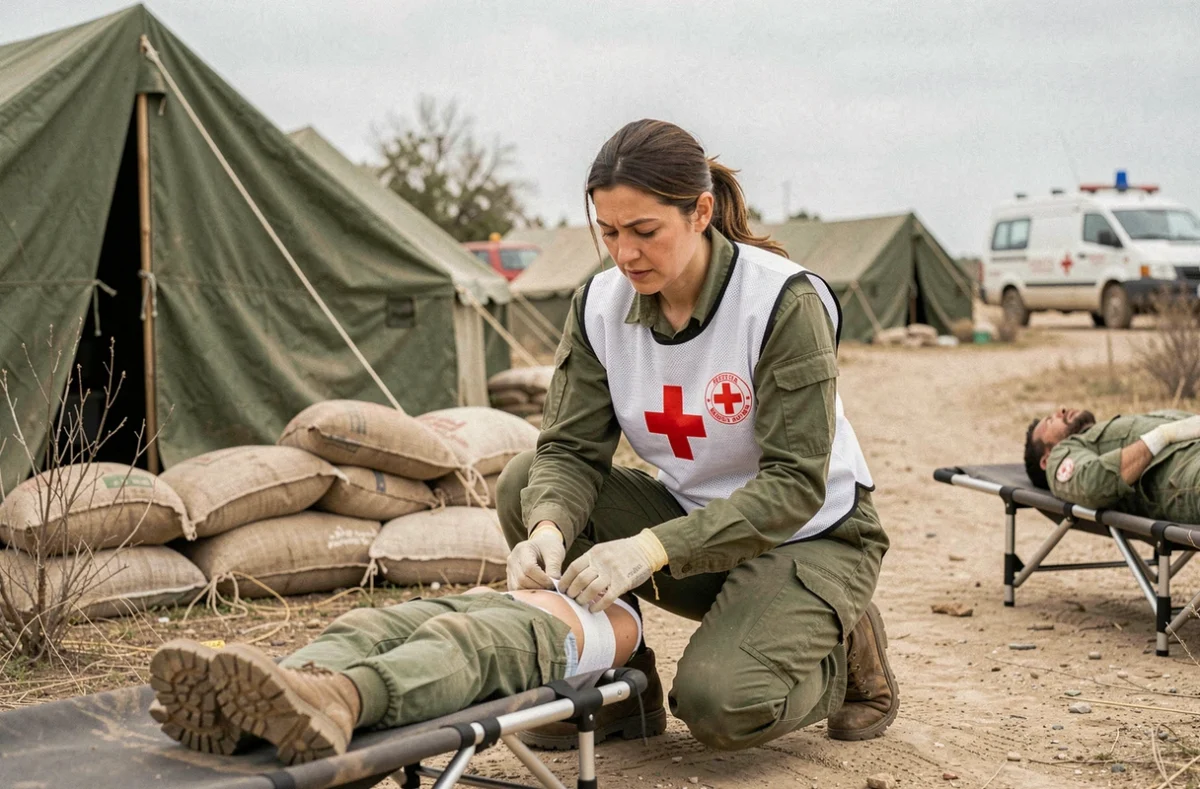
A medical convoy held up at a checkpoint, civilians trapped in a combat zone, a prisoner of war denied medical care: each situation triggers a specific legal framework—the Geneva Conventions. Adopted in 1949, these four conventions form the foundation of international humanitarian law. They impose concrete obligations on parties to a conflict toward people who are not fighting or are no longer fighting.
Cyber operations and urban warfare: what the Geneva Conventions cover today
The Geneva Conventions are often associated with conventional conflicts between regular armies. Yet their scope extends to contemporary forms of hostilities.
The ICRC notes that international humanitarian law limits cyber operations conducted in the context of an armed conflict. A cyberattack targeting a hospital or water supply network raises the same civilian protection concerns as a bombing. Disrupting healthcare services through digital means may violate the rules of the Fourth Convention, which protects civilian populations.
Urban warfare also makes the texts harder to apply. The 2025 commentary on Article 24 of the Fourth Convention addresses the impact of urban combat on children separated from their families. Parties to the conflict must provide for children under the age of fifteen who have been orphaned or separated from their families, and facilitate their maintenance, education and religious practice. This is not a vague principle: it is an obligation set out in the text.
To understand the four important Geneva Conventions in detail, start with these real-world situations before reading the articles.
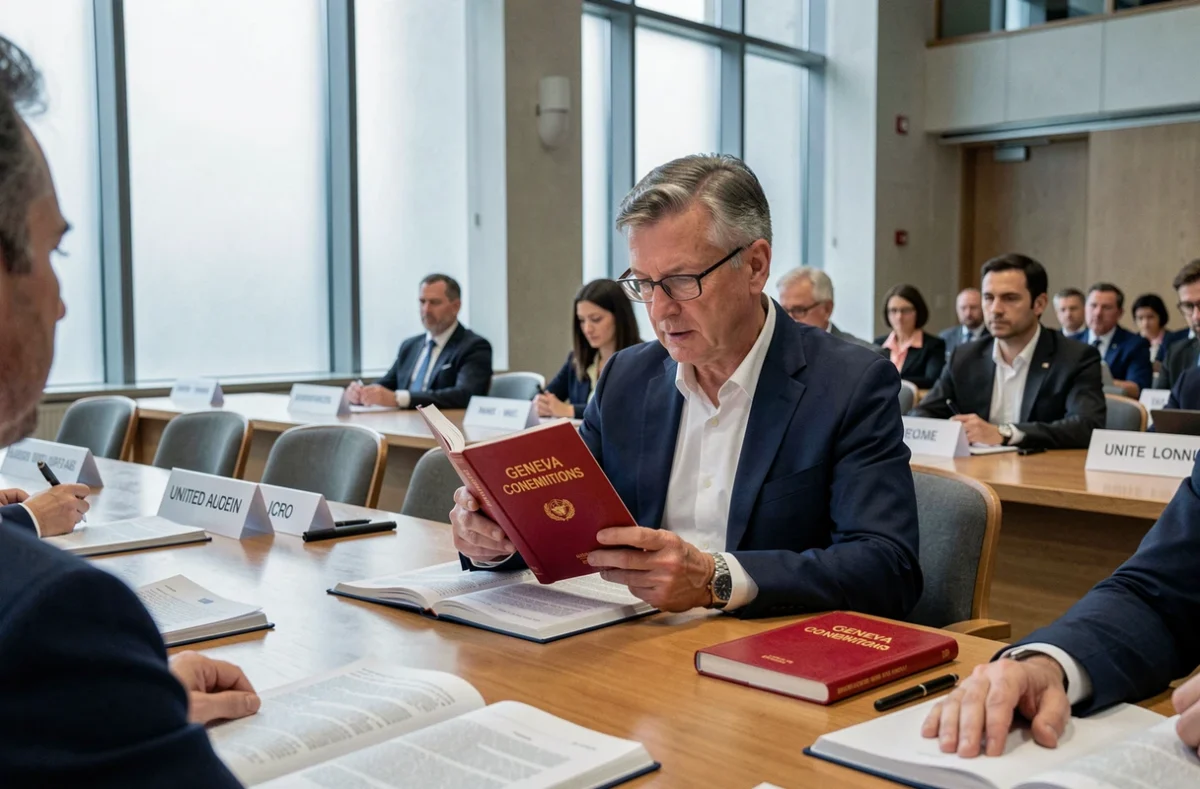
Protection of the wounded, shipwrecked and prisoners of war: three conventions, three distinct frameworks
The first three conventions focus on specific categories of victims. Each imposes obligations on belligerents that do not entirely overlap.
Wounded and sick members of land forces
The First Convention protects the wounded and sick, as well as medical personnel serving in land forces. Anyone who is hors de combat must be collected and cared for by the party in whose hands they find themselves, regardless of nationality. Ambulances, field hospitals and medical personnel receive specific protection, marked by the emblem of the red cross or red crescent.
Wounded, sick and shipwrecked members of naval forces
The Second Convention extends these protections to the naval context. Shipwrecked persons, whether military personnel or crew members of requisitioned merchant ships, must be searched for and rescued after every engagement. Hospital ships may not be attacked or captured while carrying out their medical mission.
Prisoners of war
The Third Convention sets out the status of prisoners of war in detail. It covers detention conditions, food, clothing, medical care, the right to correspond and the repatriation of seriously wounded prisoners. A prisoner of war remains protected from the moment of capture until final release. The detaining power is accountable to the international community for their treatment.
- The First Convention concerns the wounded and sick on land, as well as military medical personnel and facilities.
- The Second Convention extends protection to the wounded, sick and shipwrecked at sea, including hospital ships.
- The Third Convention sets out the rights of prisoners of war, from capture through detention to repatriation.
Fourth Geneva Convention: protecting civilians in occupied territory
The Fourth Convention marked a turning point. Before 1949, no treaty specifically protected civilian populations in the hands of the enemy.
The Fourth Convention prohibits deportations, hostage-taking and collective punishment. It requires the occupying power to maintain the operation of public health and hygiene facilities.
Civilian internees are also covered by a regulated framework. Internment rules provide for the separation of men and women, the reunification of families, and access to sufficient food and medical care. The detaining power must appoint a commandant responsible for enforcing these rules at each place of internment.
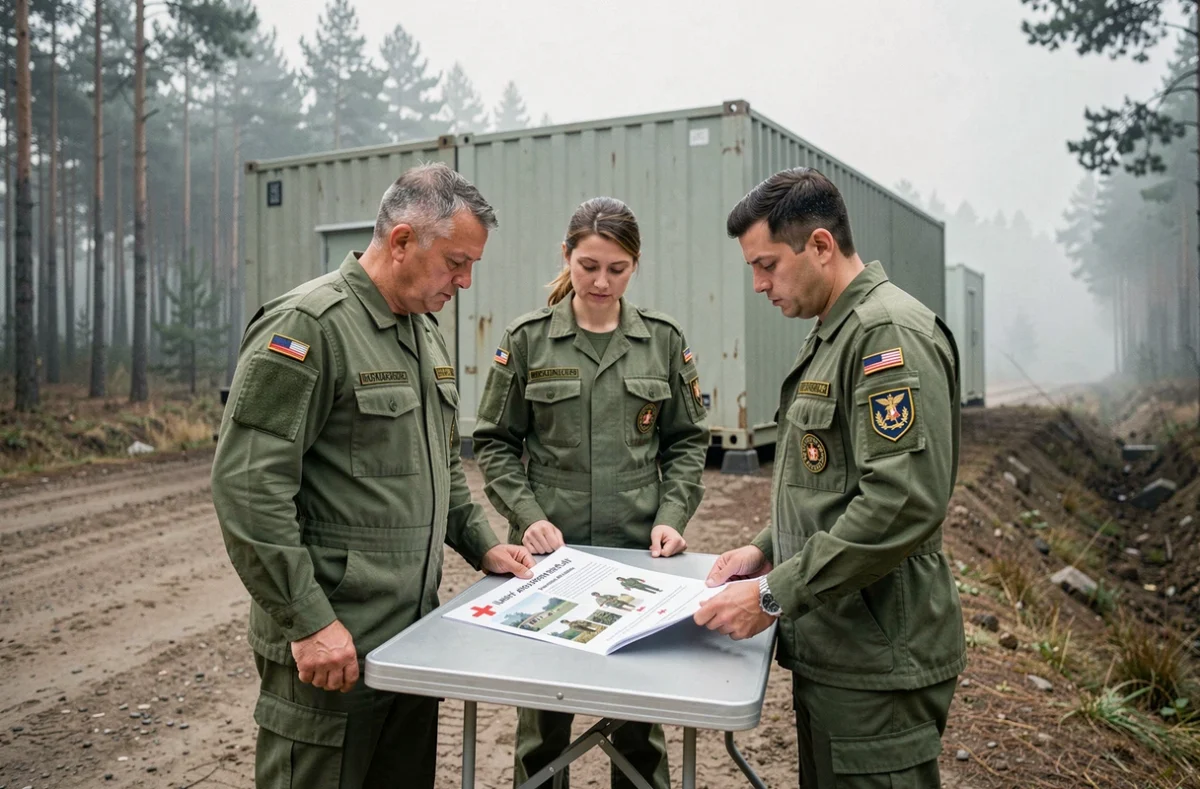
Common Article 3 of the four conventions: the minimum rules applicable to every conflict
It is sometimes described as a “mini-treaty” within the conventions. Article 3, which is identical in all four texts, applies to non-international armed conflicts—that is, civil wars and internal fighting.
It establishes a minimum level of protection that cannot be lowered:
- Prohibition of violence to life and person, torture and humiliating treatment of anyone not taking part in hostilities.
- Obligation to collect and care for the wounded and sick.
- Prohibition of sentences and executions without a prior judgment by a court offering the recognized judicial guarantees.
- The ICRC’s right to offer its services to the parties to the conflict.
Article 3 applies even if no state has formally declared war. It is a legal safety net covering situations in which the other provisions of the conventions, designed for conflicts between states, do not apply directly.
The 1977 Additional Protocols complement this framework. Protocol I strengthens the rules governing international conflicts, particularly the protection of civilians from the effects of hostilities. Protocol II expands the protections in Article 3 for non-international conflicts.
The reach of these texts stems from their near-universal acceptance. The Geneva Conventions are among the most widely ratified treaties in the world. What varies from one state to another is ratification of the Additional Protocols and the effective implementation of these obligations in domestic law.