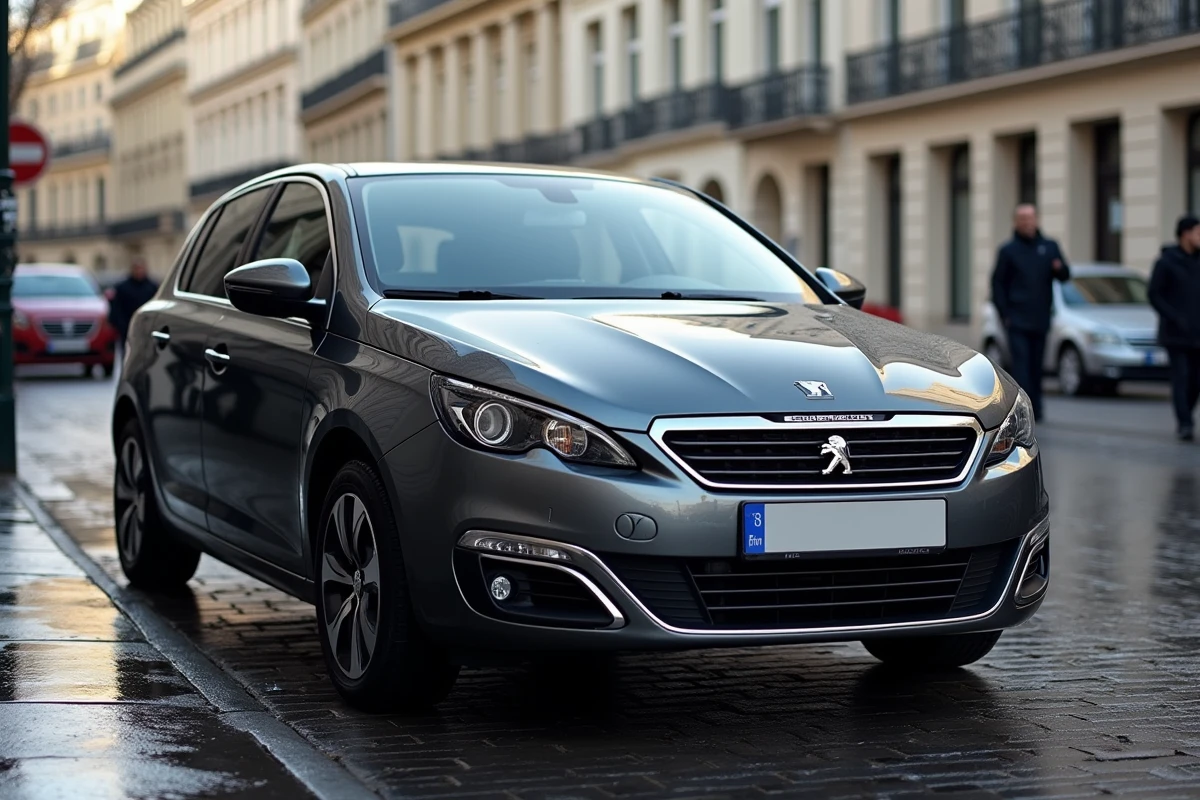
The Peugeot 308 III has shifted gray from a default color status to a stylistic signature. Understanding the differences between each shade offered in the catalog allows for a choice that is consistent with the finish, use, and resale value of the vehicle.
Paint codes and pigment composition of grays available on Peugeot 308
Each gray in the catalog carries a manufacturer paint code that determines the exact pigment formula. Artense Gray (KCA), Platinum Gray, Aluminum Gray (EZR), Hurricane Gray (KTG), Shark Gray (KTP), Thorium Gray (KTH), or Vapor Grey (EVG) do not share the same base or type of pearlescence.
We observe that cool grays (Artense, Shark) incorporate bluish pigments that lean the shade towards steel, while warm grays (Platinum, Aluminum) play with golden or greenish reflections depending on the lighting. The behavior under LED light differs radically from one code to another: Artense Gray appears almost anthracite in artificial lighting, whereas Aluminum Gray maintains its clarity.
For an owner considering localized touch-ups or partial wrapping (roof, mirror caps, bumper blades), knowing the shades of gray for the Peugeot 308 and their manufacturer reference avoids any color matching errors when ordering paint.
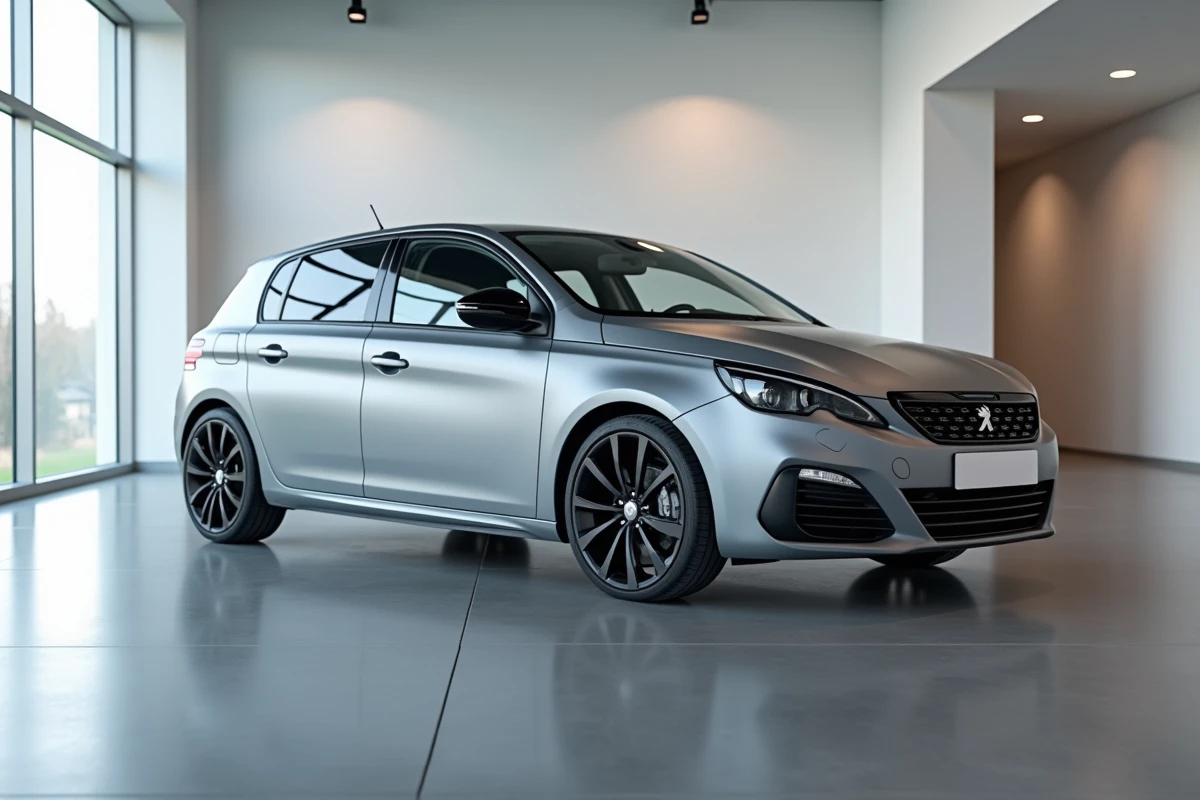
Artense Gray, Shark Gray, Platinum Gray: positioning in the 308 range
Peugeot has reorganized its gray palette around a techno-premium logic since the 308 III. Shades like Artense Gray and Platinum Gray are reserved for high-end finishes (Allure, GT), making them a visual marker of premium positioning. The old base grays, like Hurricane Gray found on the 308 I and II, are gradually disappearing from configurators.
This repositioning has a direct consequence on the vehicle’s price. A high-end pearlescent or metallic gray represents an additional cost at order compared to the standard white, but it better protects the residual value in the used car market. Dark gray models in GT trim sell more easily than bright shades, which further segment the customer base.
Artense Gray vs. Shark Gray: two philosophies
Artense Gray (KCA) displays a deep darkness with pearlescent particles that create a three-dimensional effect. It enhances the taut lines of the 308 by accentuating the body edges. Shark Gray (KTP), lighter and more metallic, produces a more conventional finish, suitable for drivers looking for a versatile gray without dramatic effect.
We recommend Artense Gray to owners who want to maximize the character of the 308 GT, and Shark Gray to those who prioritize ease of maintenance. A dark gray reveals every micro-scratch, every trace of limescale after washing, whereas a medium gray is more forgiving.
Color development process at Peugeot and impact on design
Peugeot’s color and materials design center treats each new shade as a standalone design object. The development of a specific gray can take up to three years before it is validated for mass production.
The process relies on constant back-and-forth between the design studio, sessions in natural light, and tests in neutral light booths. The goal: to ensure that the shade “lives” correctly under all types of lighting (direct sunlight, parking neon, urban LED). A gray that seems perfect in the studio may appear dull or greenish under sodium lighting, leading to a return to formulation.
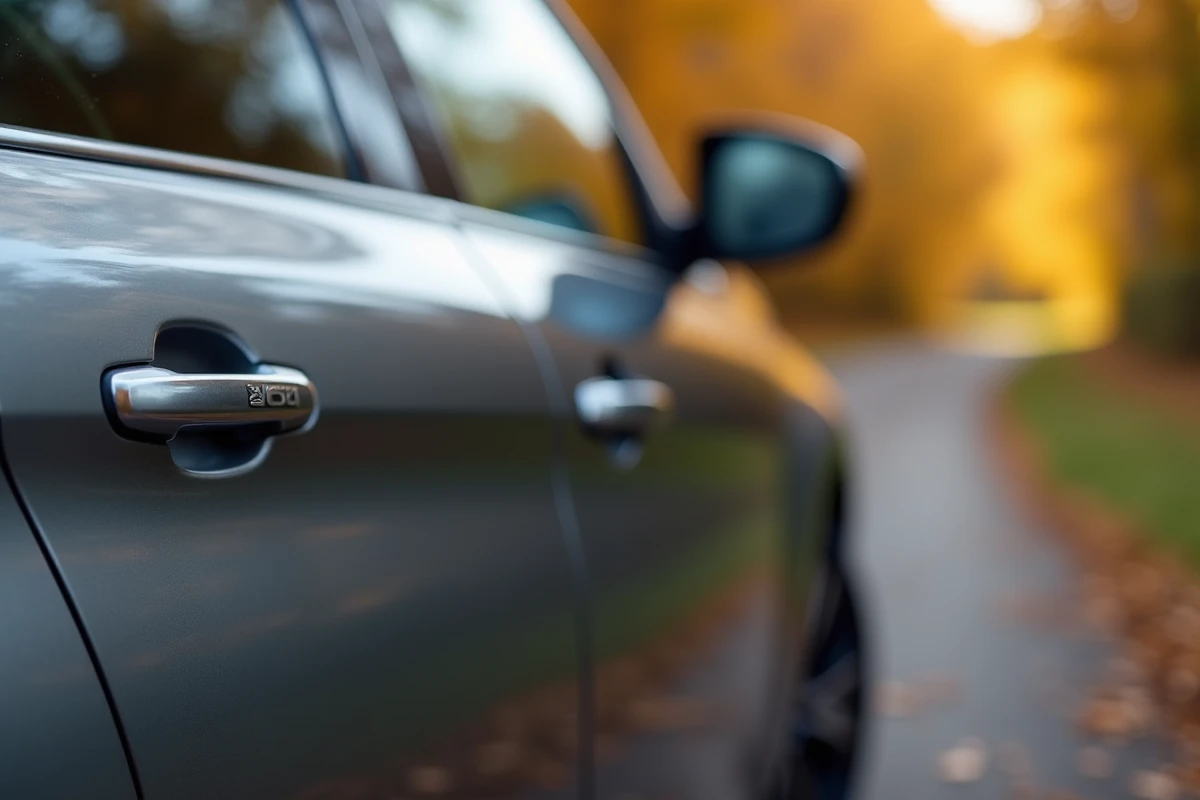
Pearlescent, metallic, opaque: what finish for which gray
The grays of the 308 are divided into three technical families:
- The pearlescent grays (like Artense) contain mica-based pigments that reflect light directionally, creating a depth effect that varies with the angle of observation.
- The metallic grays (like Aluminum, Hurricane) use aluminum flakes that diffuse light more uniformly, with a shiny and homogeneous appearance.
- The opaque grays, rarer on the recent 308, offer a matte and uniform finish, without reflection or depth, favored in special series or entry-level trims that are now disappearing.
The choice between these three families radically changes the vehicle’s appearance. A pearlescent gray gives an exclusive character, almost comparable to a premium sedan shade. A metallic gray remains the most common compromise between elegance and practicality.
Maintenance and protection according to the chosen shade of gray
The level of maintenance varies greatly from one gray to another. Dark pearlescent grays like Artense require regular non-abrasive washing to preserve the shine of the mica pigments. A ceramic treatment is particularly relevant on these shades, as it fills the micro-roughness of the varnish and reduces the adhesion of contaminants.
Light metallic grays tolerate less rigorous maintenance. Swirl marks (micro-scratches) remain less visible on Aluminum Gray or Vapor Grey, which suits drivers who do not have time to polish their vehicle regularly.
- On dark pearlescent gray: neutral pH wash, microfiber drying, semi-annual polishing, ceramic protection or synthetic wax.
- On medium metallic gray: standard wash, protective wax once or twice a year, occasional impact correction.
- On light gray: regular washing is sufficient, with attention to tar projections being more visible than on dark shades.
Partial customization (black roof, side stripes, glossy black mirror cap) works better with light grays that offer a sharp contrast. On a dark gray, black barely stands out, and the two-tone effect loses its appeal.
Gray on the 308 is no longer a neutral choice. Each paint code involves an aesthetic, a level of maintenance, and a positioning in the resale market. Precisely identifying the shade that corresponds to your daily use and finish remains the best way to take advantage of the design work that Peugeot invests in its palette.